Our Centennial
A Century of Maritime Excellence and Global Trade

A Century of Impact
In 2025, Port Freeport marked its centennial —100 years of advancing maritime trade, strengthening industry, and supporting communities across the region. This achievement is a tribute to the bold decisions of early visionaries, the strength of community partnerships, and a legacy of innovation that continues to shape the Port today.
Impact at a Glance

$157.3 Billion Total Annual Economic Impact

266,000+ Jobs Supported Nationwide

Zero-Tax Rate Maintained for the First Time in Port History

1800s: Early Exploration and Foundations of Port Development
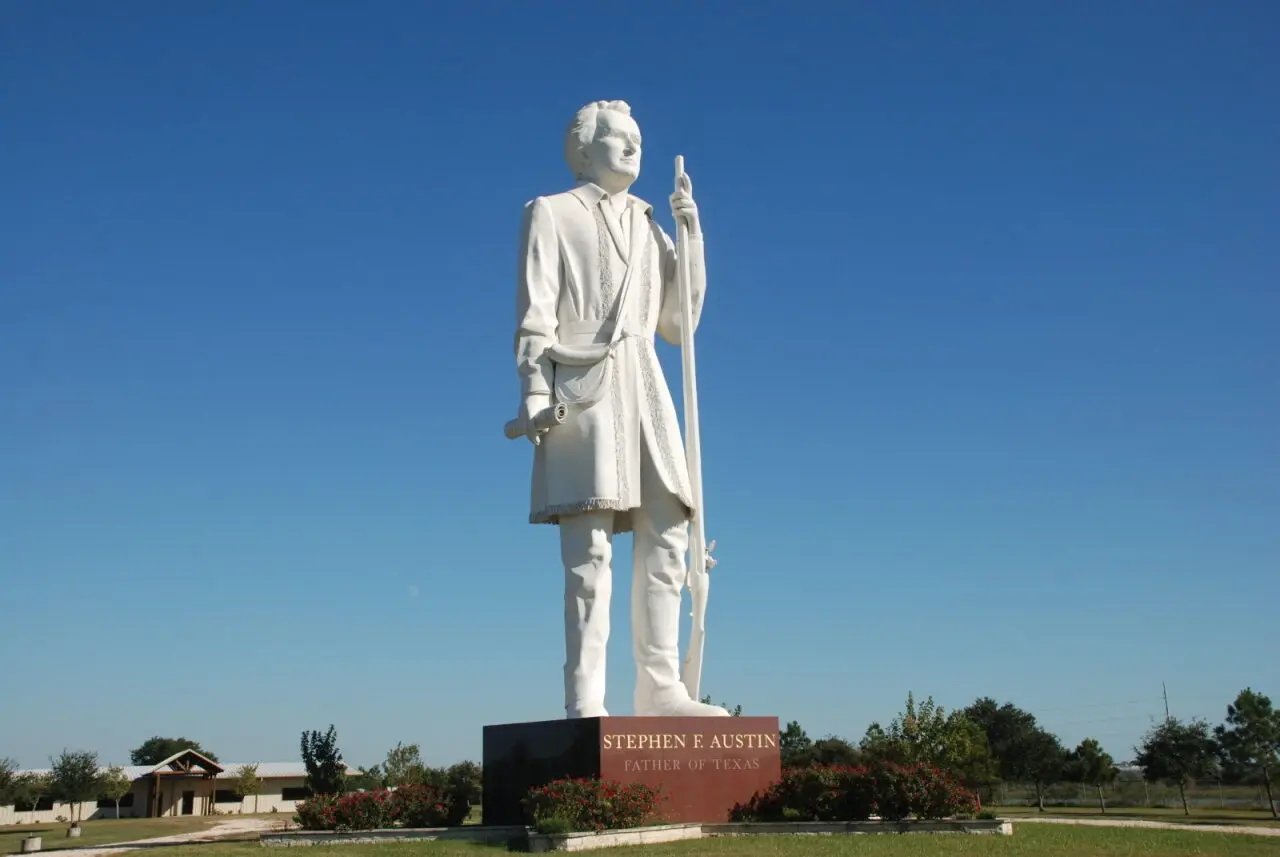
The history of navigation in the Brazos River area can be traced to as early as 1528 when the Spanish explorer Cabeza de Vaca first arrived in the “New Land”. In 1821, Stephen F. Austin chose the mouth of the Brazos River as the location of a colony and deepwater port to be developed. Throughout the nineteenth century and beyond, the area’s importance as a trade and shipping area became more viable.
In 1889, Congress authorized the Brazos River and Dock Company to construct, own and operate sufficient jetties as might be necessary to create a navigable channel between the mouth of the Brazos River and the Gulf of Mexico. Granite jetties were constructed by the Brazos River and Dock Company at a cost of $1,449,025.
1920s: Establishment of the Port and Waterway Development
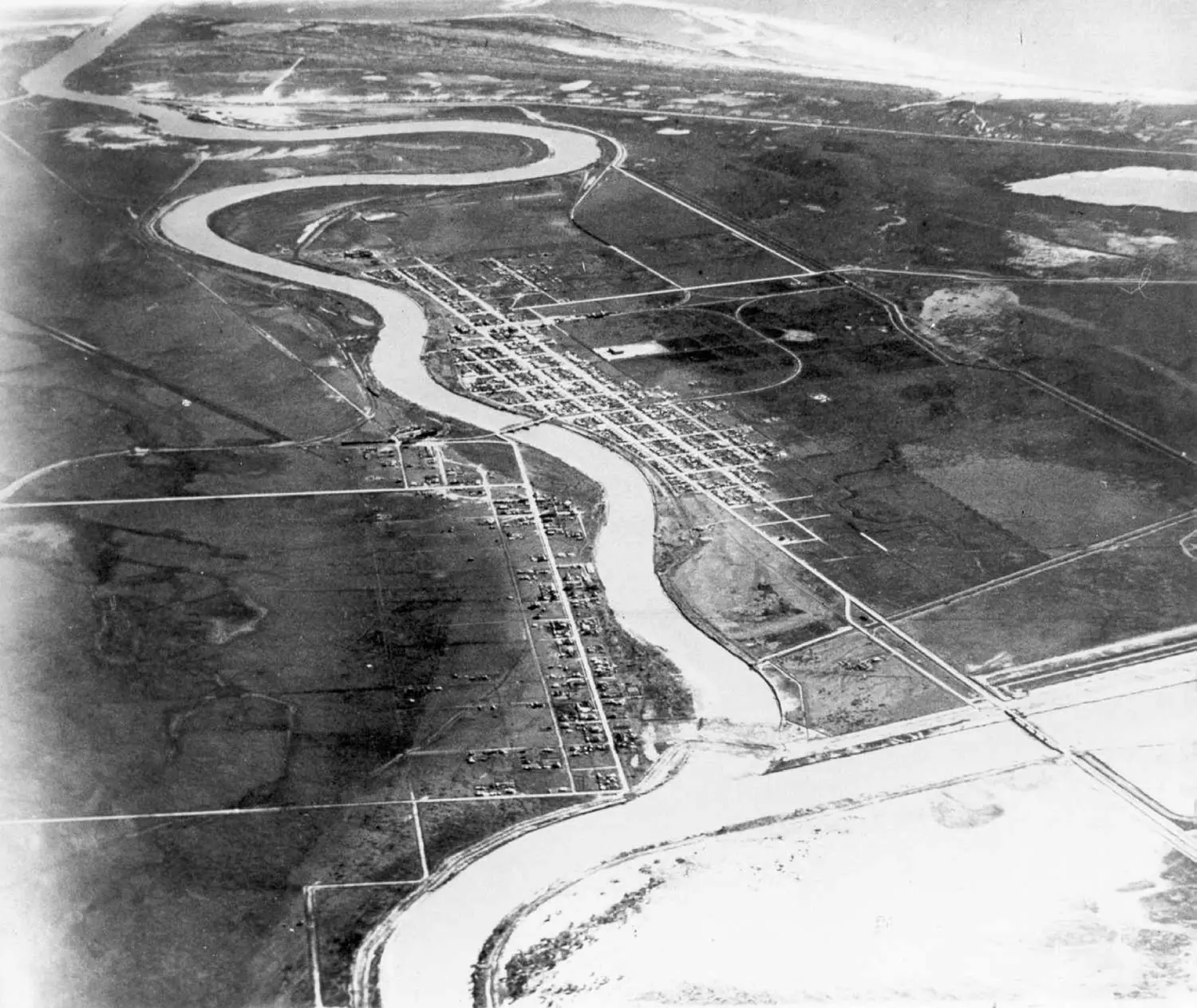
The Brazos River Harbor Navigation District was created on the 4th day of December 1925 by an action of the voters who also approved the issuance of $989,000 of ad valorem tax bonds to be utilized for the elimination of the river jetty siltation - shoaling problems by diversion of the “live” Brazos River to another course for its final flow to the Gulf of Mexico and to construct a bridge over the Diversion Channel.
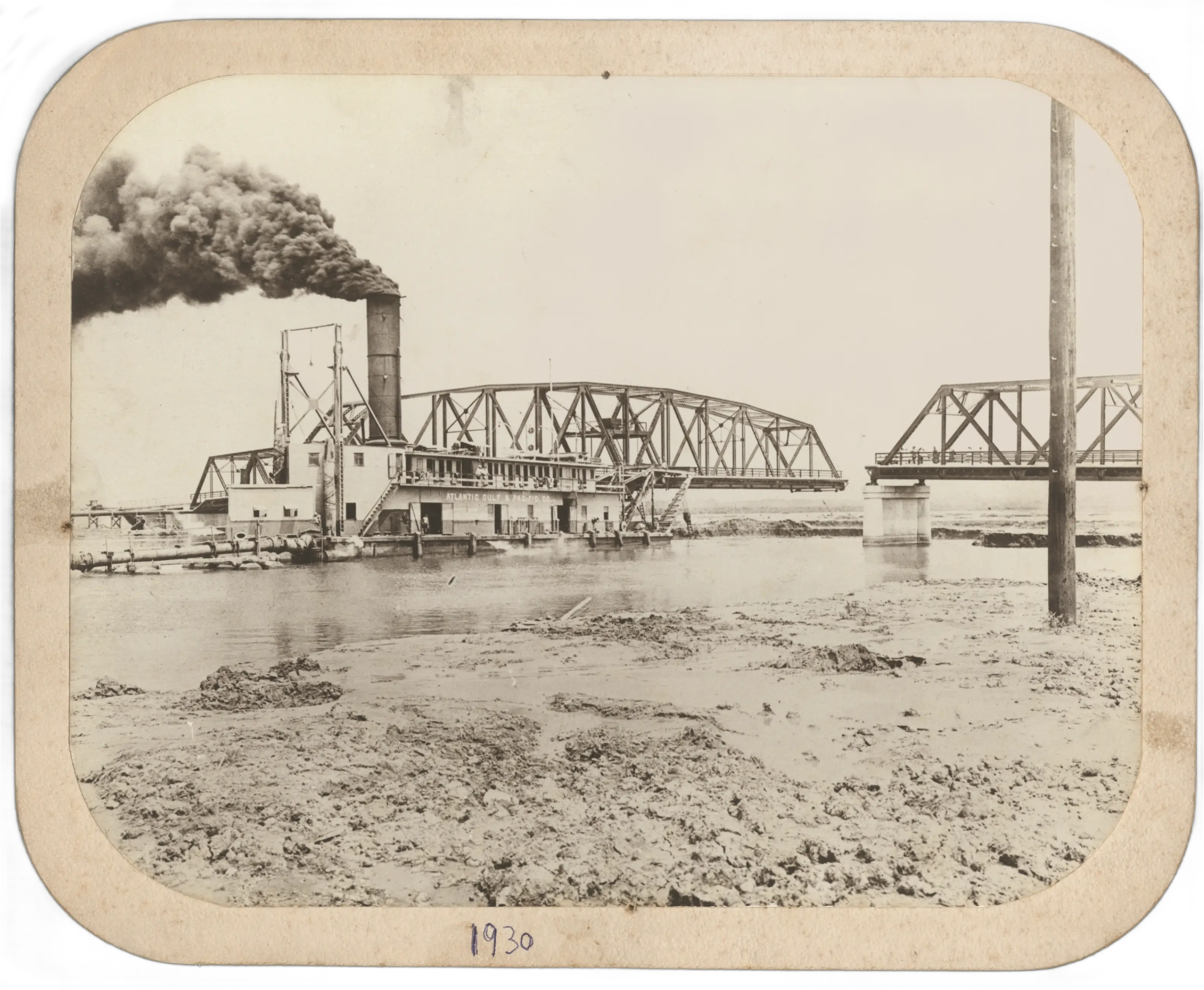
The Diversion Channel was completed in September 1929, making way for the District to dredge the old River Harbor Channel. On December 14, 1925, the Brazoria County Commissioners signed the order and appointed three commissioners to the Board of Navigation and Canal Commissioners.
1940s: Industrial Expansion and Wartime Support
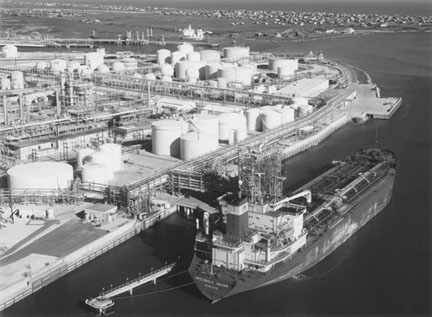
In 1940, The Dow Chemical Company purchased a 640-acre tract at the bend of the River Harbor Channel, including three miles of harbor frontage, to construct Dow Plant A, the largest magnesium extraction plant in the world.
During World War II, the Government Defense Corporation constructed an aviation gasoline refinery at Sweeny and marine loading facilities at the Freeport Harbor. These facilities were later sold to Phillips Petroleum, now known as Phillips 66.
1950s: First Dock and Terminal Facilities
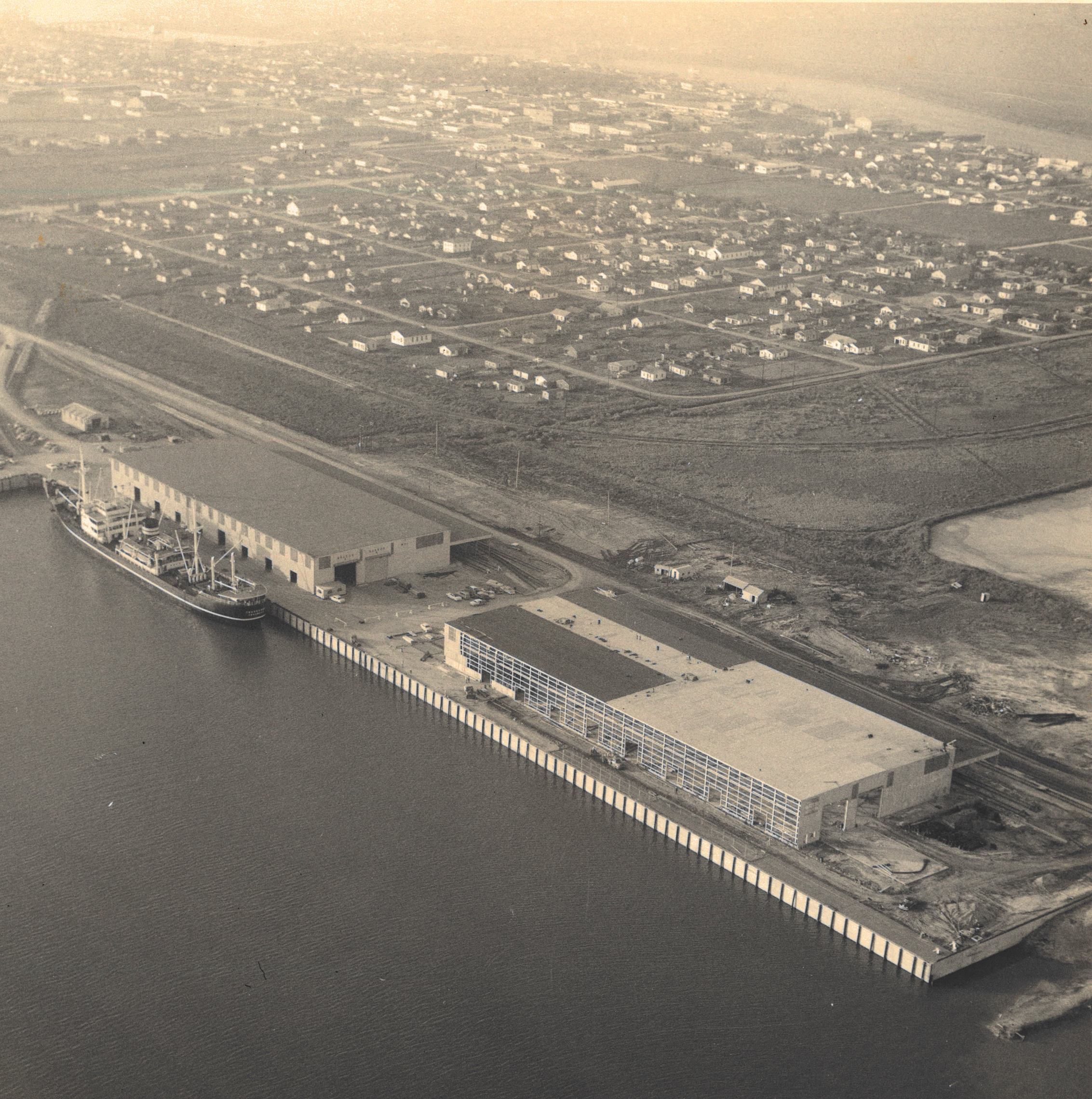
In January 1951, the voters approved the issuance of $2,600,000 of ad valorem tax bonds to be utilized for the purchase of additional land for the construction of the Harbor and District’s first dock and terminal facilities.
In June 1957, the voters approved the issuance of $1,500,000 of Port Revenue Bonds for construction of a second transit shed and dock facility.
1960s: Expansion of Governance and Infrastructure Growth
In 1960, the size of the elected number of Commissioners was increased from three to six positions by an act of the Texas Legislature.
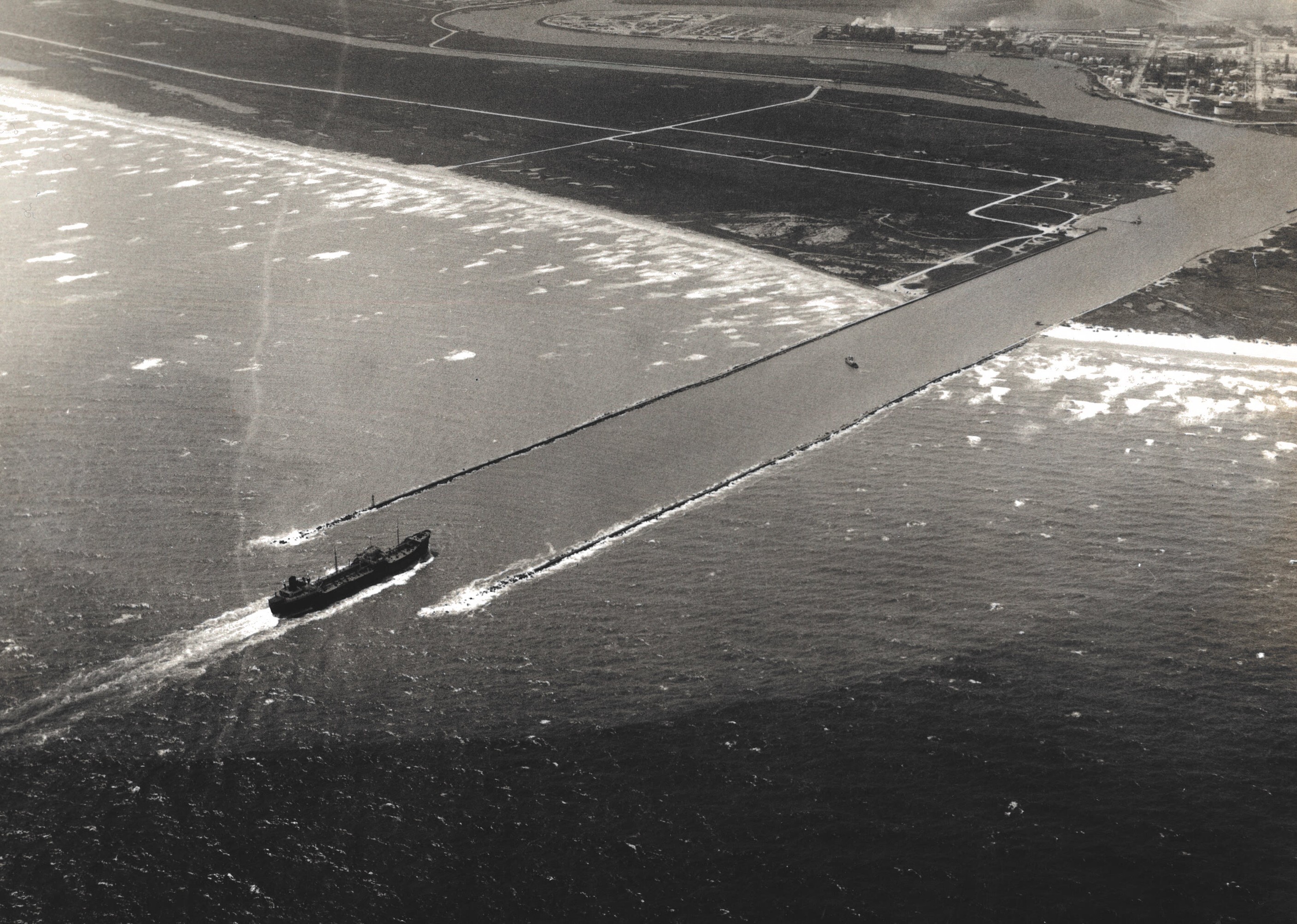
In 1961, the harbor and channel were first dredged to the project depth of 36 - feet by the Federal Government. In January 1964, Transit Shed No. 5 was opened for business. This 36,000-square-foot cargo storage facility was constructed with retained Port revenues; no bonds were issued for its construction.
In May 1969, the Board of Navigation and Canal Commissioners authorized the issuance of $865,000 of Port Revenue Bonds for the construction of a 60,000-square-foot warehouse, known as Warehouse 53, as well as modifications and improvements to other District warehouses, transit sheds and dock facilities.
1980s: Strategic Investment and Expansion of Trade Capabilities
In October 1980, the voters approved the issuance of $20,000,000 of ad valorem tax bonds for the acquisition of 8,700 acres of land for future industrial development and for expenses related to the District’s waterway and jetty system widening and deepening project, construction of additional office and warehouse space and improvements to existing Port facilities.
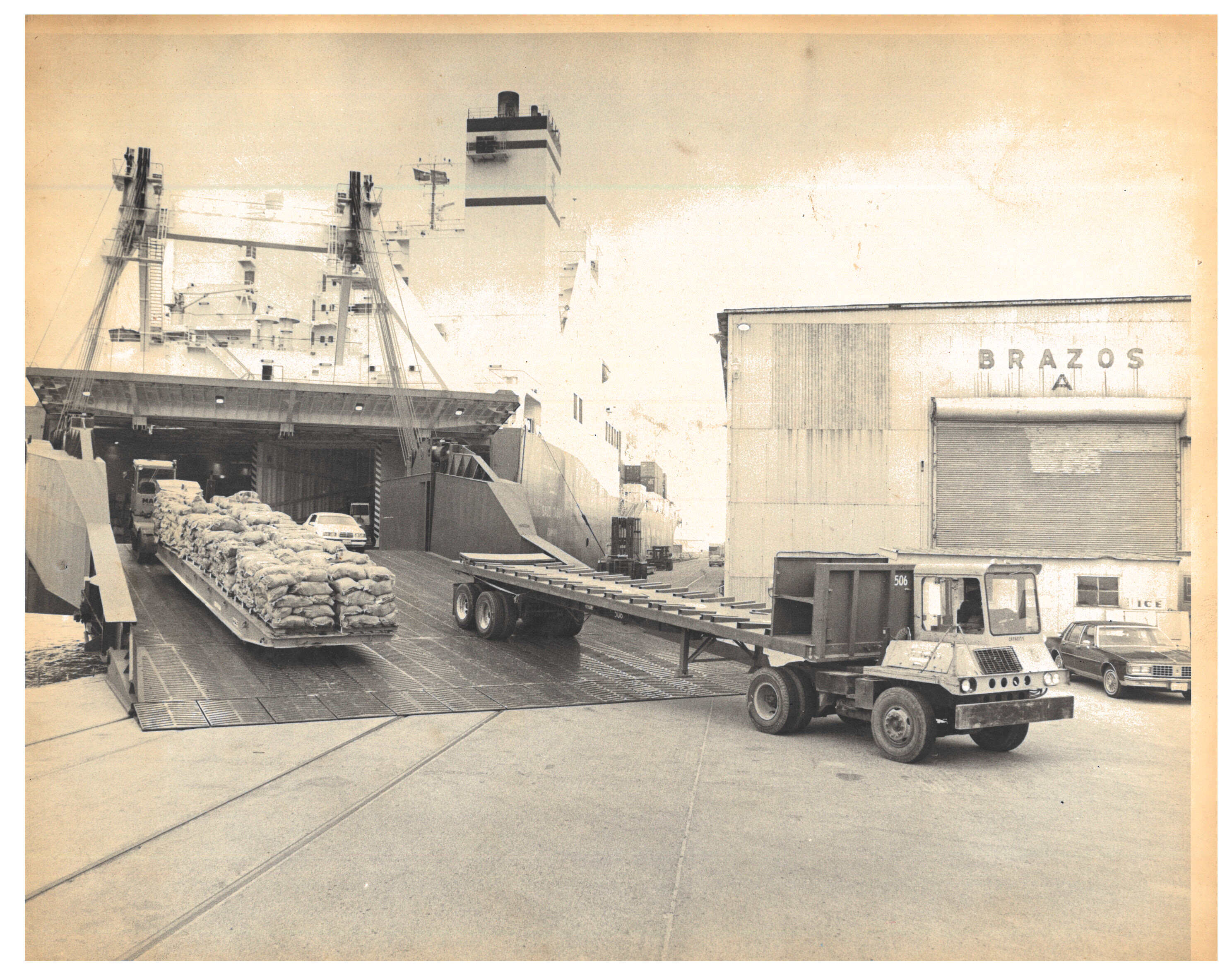
In 1983, the Board of Navigation and Canal Commissioners entered into a lease agreement with Dole Fresh Fruit Company to construct a trailer marshaling yard and maintenance facility to handle Dole’s weekly-containerized fruit import and commodity export trade.
In 1985, the Board of Navigation and Canal Commissioners entered into a lease agreement with American Rice, Inc. to construct the largest state-of-the-art rice milling facility in the United States on a site leased to it by the Port and authorized the issuance of Port Revenue Bonds for the construction of an additional berth, 180,000 square feet of transit sheds, a barge unloading facility along with numerous major infrastructure improvements.
1980s: Federal Authorization and Infrastructure Advancement
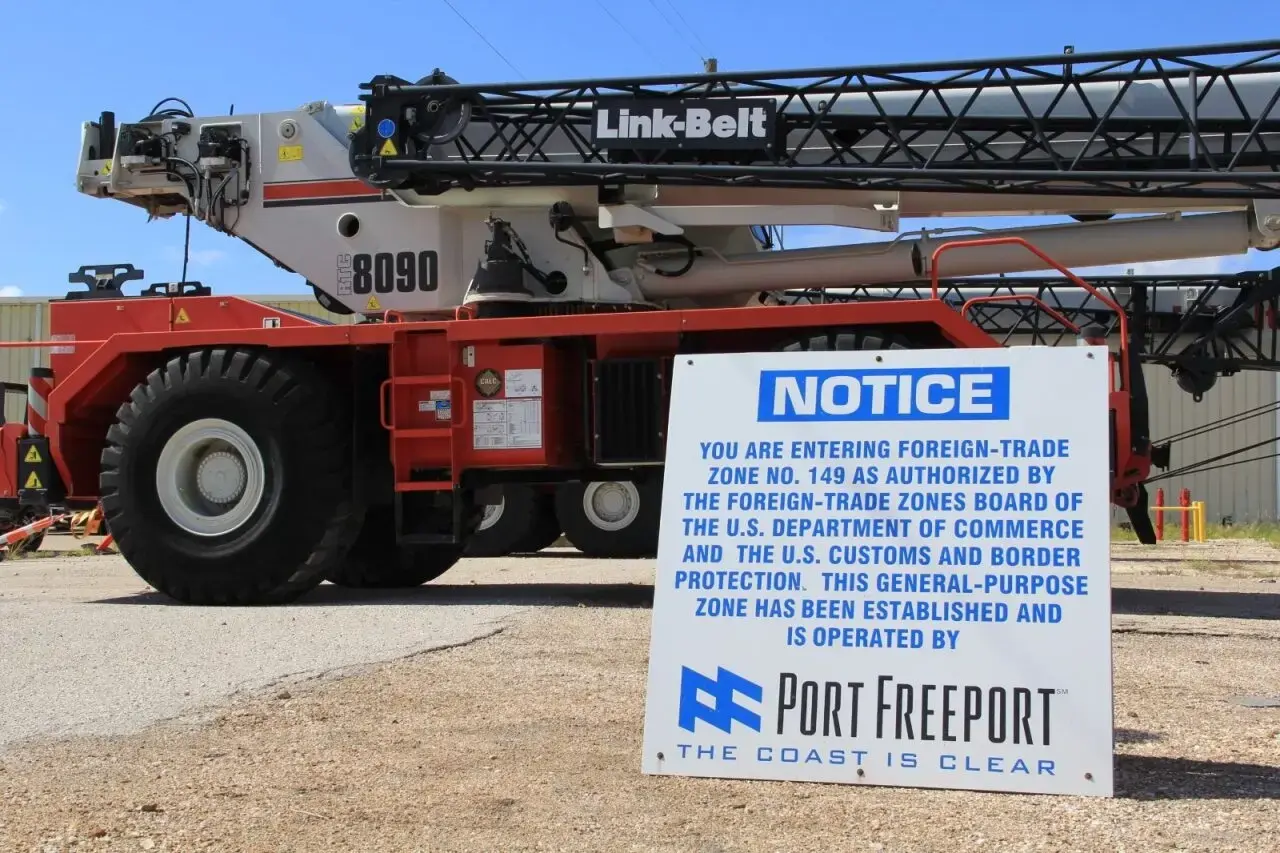
In June 1985, then Texas Governor Mark White signed a bill authorizing the Brazos River Harbor Navigation District to apply for and to accept, operate and maintain a Foreign-Trade Zone within its boundaries. The Foreign-Trade Zones Board in June 1988, issued Order No. 385 approving the establishment of Foreign-Trade Zone No. 149 at specific sites located within the jurisdiction of the Brazos River Harbor Navigation District. In July 1988, authorization to “activate” sites of Foreign-Trade Zone No. 149 were issued by the District Director of the U. S. Customs Service and the first goods were received into Foreign-Trade Zone No. 149.
In 1962, the District requested the U. S. Army Corps of Engineers (USACE) to study the widening and deepening of the Freeport jetty system, channels, and harbor to improve navigation and to accommodate the larger ships that were first appearing at this time and were forecasted to be standard fleet size soon. Twenty-four years later, on November 17, 1986, President Ronald Reagan signed “The Water Resources Development Act of 1986” which authorized the first new waterway construction starts since 1976. The authorization included the Freeport Harbor, Texas, 45-Foot Project, at an estimated total project cost of $88,600,000 of which $29,200,000 was non-federal/local expense. To satisfy the recreational requirements of the project, the District completed the Surfside Jetty Park Complex in 1994, and through an Interlocal Cooperation Agreement with Brazoria County, turned the park over to the Brazoria County Parks Department for operation and maintenance.
In 1987, BASF Corporation completed a marine unloading facility for the import of ammonia to supply the BASF Freeport manufacturing site.
In 1989, the Board of Navigation and Canal Commissioners authorized the purchase of the Canadian Millworks, Inc. leasehold improvements, now known as Warehouse 51, for $350,000. The facility has undergone major upgrades and is presently being utilized for warehousing of cargoes.
1990s: Industrial Partnerships and Offshore Development
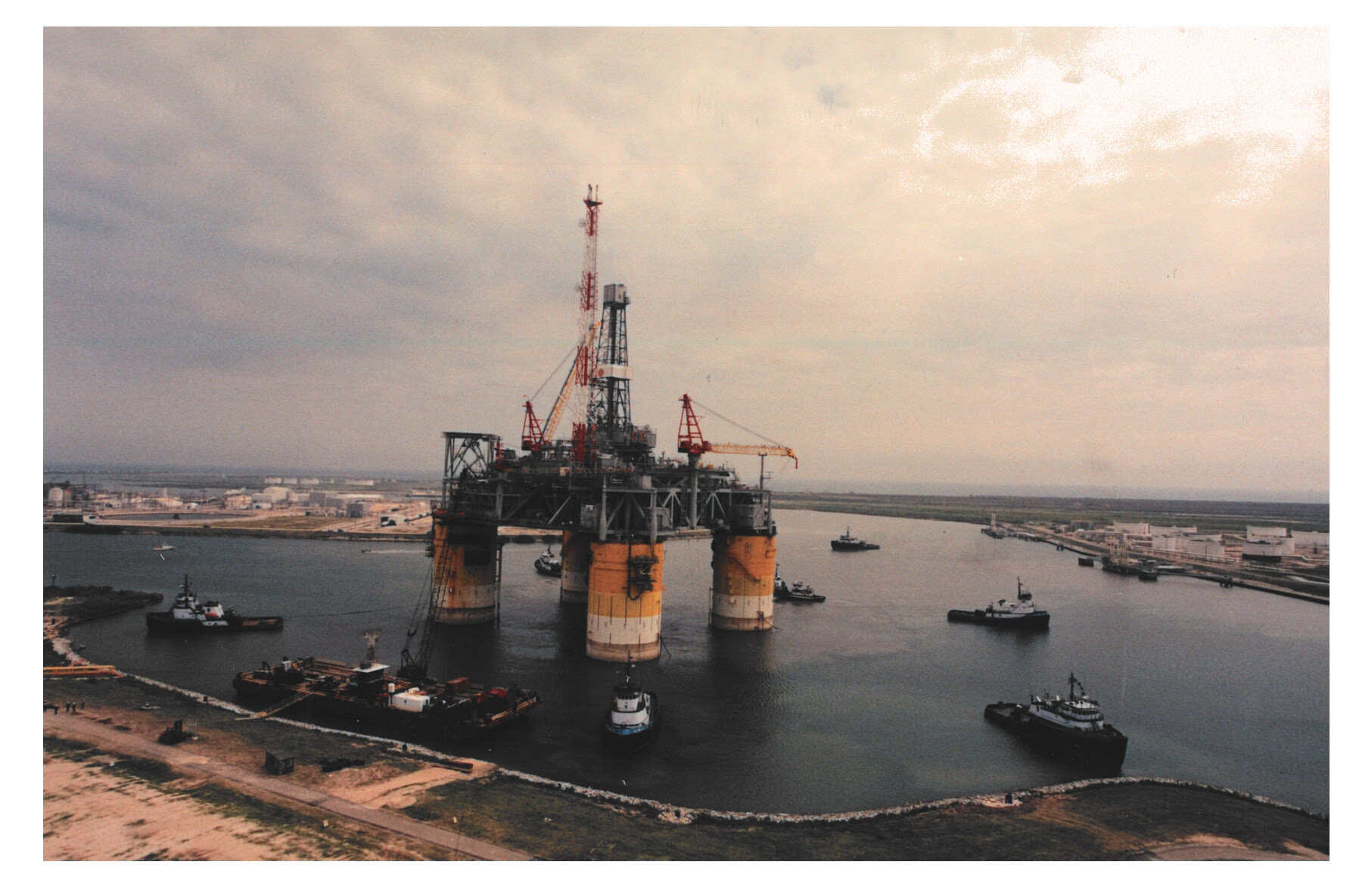
In January 1993, the Board of Navigation and Canal Commissioners entered into an Industrial Lease and Docking Agreement with McDermott, Inc. for the pre-and post-mating hook-up and commissioning site for Shell Offshore, Inc.’s “Auger” Tension Leg Platform Project. In conjunction with the lease, the District realized over $580,000 in permanent site improvements to District lands fronting on the Brazos River channel. Additionally, the District contracted for the dredging of a 60-foot-deep berthing area in the Upper Turning Basin.
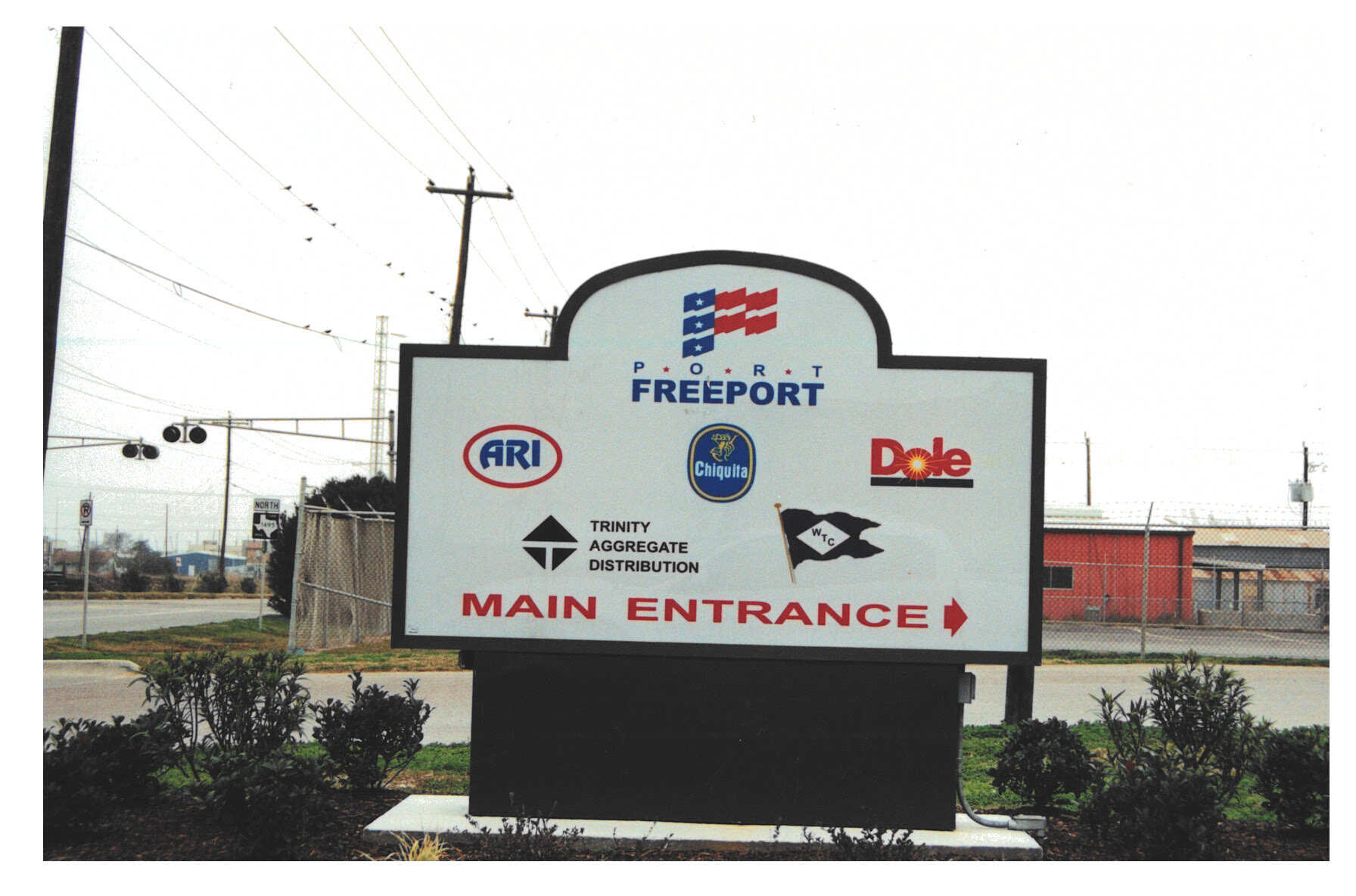
In September 1995, the Board of Navigation and Canal Commissioners entered into a lease agreement with Chiquita Brands, Inc. for the construction of a Green Fruit Terminal on leased Port lands. The terminal includes space for up to 200 containers on chassis, interchange, and maintenance facilities, as well as modular office units at a total cost of $2.5 million. Terminal operations commenced in March 1996. $3,265,000 of Port Revenue Bonds were issued to finance the Green Fruit Terminal as well as renovations to Berth No. 1.
1990s: Infrastructure Investment and Port Expansion
In December 1998, the voters approved the issuance of $16,000,000 of ad valorem tax bonds to be utilized for the purchase and commissioning of a $3.1 million mobile harbor crane, a 500-foot extension of Berth No. 5 and berthing area improvements at Parcel 39. To facilitate the more efficient handling of containerized and project cargoes and to handle the additional loads from container handling equipment, the dock aprons of Berths No. 1 and No. 2 were widened from 45 feet to 100 feet in 1998-1999 by demolition of a portion of the transit sheds. These projects were funded by a combination of Port revenue bonds and retained earnings. In 1998, Warehouse 52, a 36,000-square-foot facility, was constructed and is currently being used for domestic warehousing and cargo storage. This project was funded with Port retained earnings.
In 1999, the District acquired two tracts of land adjacent to the Port for future development and expansion. The first is a 2.5-acre tract, formerly occupied by Freeport Welding and Fabrication. The second is a 45-acre tract, formerly owned by Marathon Oil Company, with deep-water frontage on the Old Brazos River.
In 1999, the main Port entrance was rebuilt and widened, the 30-plus year-old pavement west of the rail crossing on Pete Schaff Blvd. was replaced, and the final phase of a 5-acre open storage yard was completed.
In 2000, the Deep Berthing Area was dredged to a depth of 70 feet, making it one of only two 70-foot-deep berthing areas in the Upper Gulf Coast. The first phase of Berthing Area Improvements, Parcel 39, was completed in 2000, which included dredging a berthing area to 40-foot depth, the installation of monopile breasting/mooring dolphins. These projects were funded with proceeds from the 1998 bond issuance.
2000s: Modernization and Expansion of Port Capacity
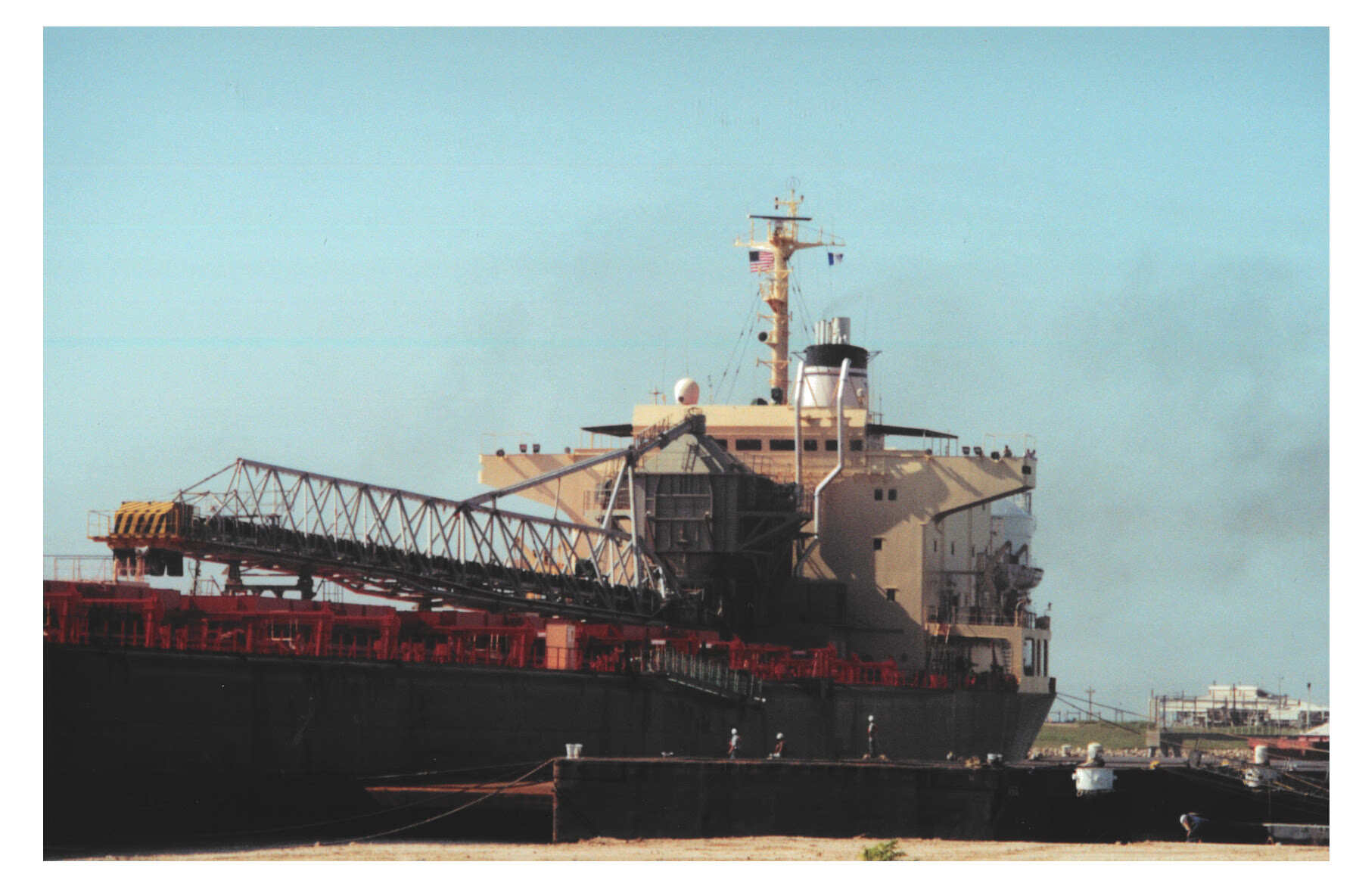
In March 2000, the Board of Navigation and Canal Commissioners entered into a lease agreement with Transit Mix Concrete and Materials, a division of Trinity Industries (now Vulcan Materials), to import limestone for the construction industry. In October, the first self-unloading vessel carrying over 60,000 tons of limestone discharged at their facility located on the Upper Turning Basin.
In 2000-2001 the Port completed the Berth 5 Extension Project, increasing the number of public deep-water berths from three to four. A harbor tug berthing facility was constructed to provide a home base for harbor tugs serving vessels in Port Freeport. A portion of Transit Shed No. 5 was demolished, and the balance renovated to provide for a 100-foot-wide dock apron and more efficient handling of cargo. These projects were funded with proceeds from the 1998 bond issuance.
In 2001, the Board of Navigation and Canal Commissioners signed a lease agreement with Parker/Cabett Subsea Products Inc. to construct a state-of-the-art umbilical cable manufacturing facility to serve the offshore oil and gas industry. The facility is located adjacent to the recently completed Berth 5 and manufactured its first cable in early 2002.
2000s: Strategic Planning and Channel Development
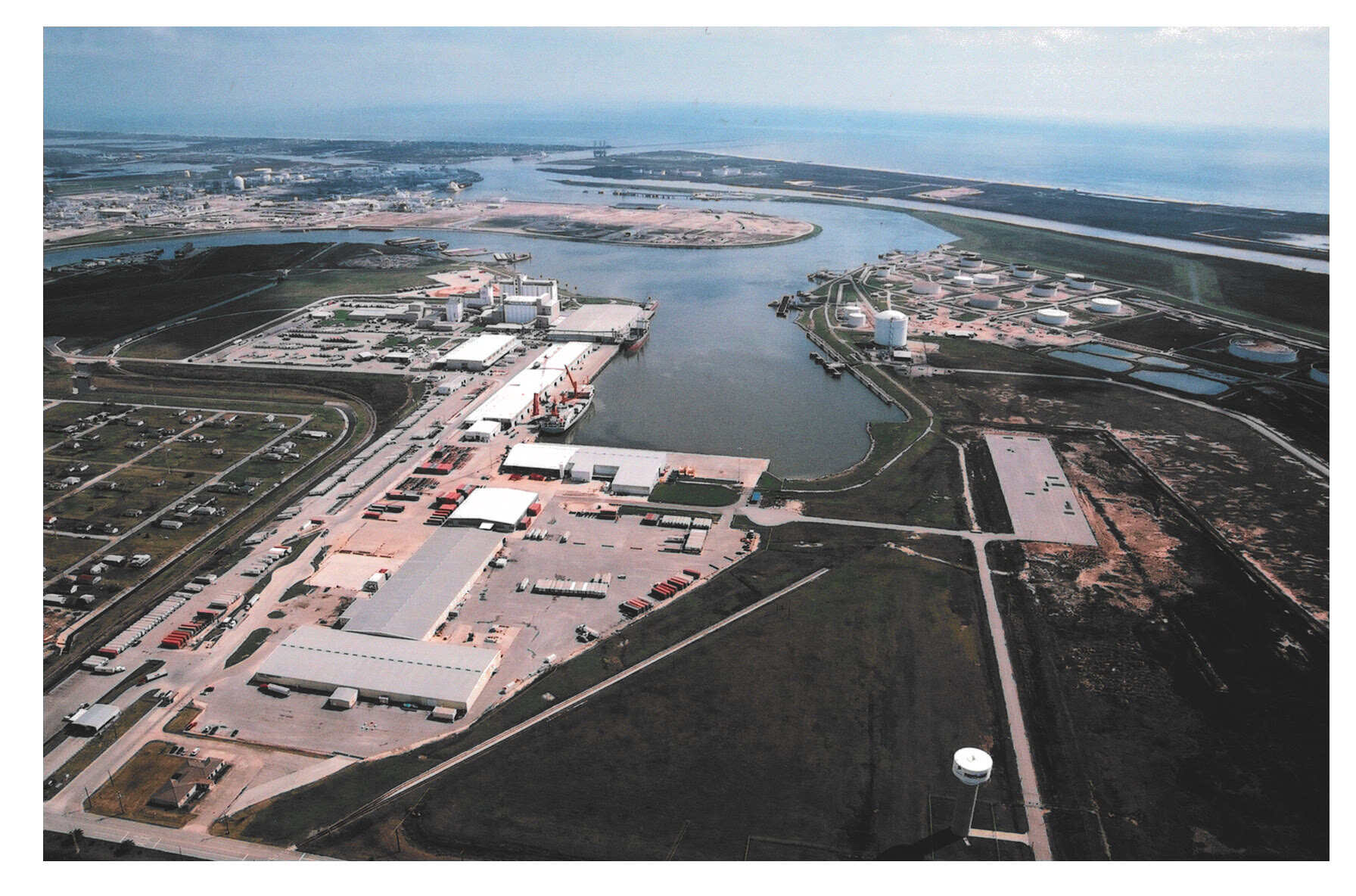
In 2002, the Port contracted for the development of a Conceptual Master Plan that provides for the organized expansion of the Port over the next 20 years to serve the marine industry. Also, in 2002, the Port started the process of widening and deepening the Freeport Harbor Channel to serve larger vessels and the anticipated increase in vessel traffic. The USACE issued the Section 216 Reconnaissance Phase Report that identified a federal interest in the project. In 2003, the Board of Navigation and Canal Commissioners entered into a $6.5 million Feasibility Cost Sharing Agreement with the USACE for the Freeport Harbor Channel Improvement Project (FHCIP).
%20employees%201990.jpg)
2000s: Cargo Diversification and Energy Development
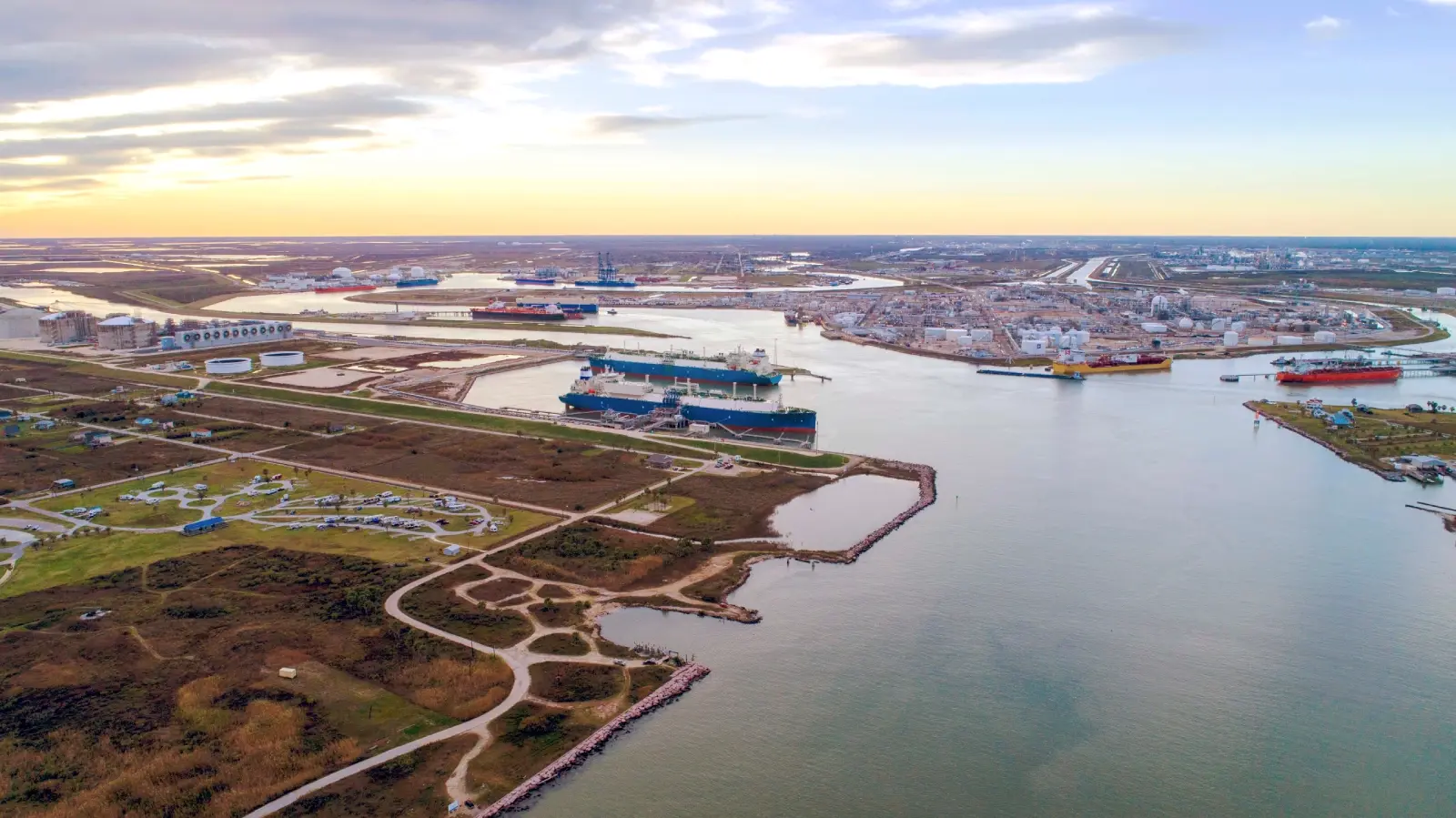
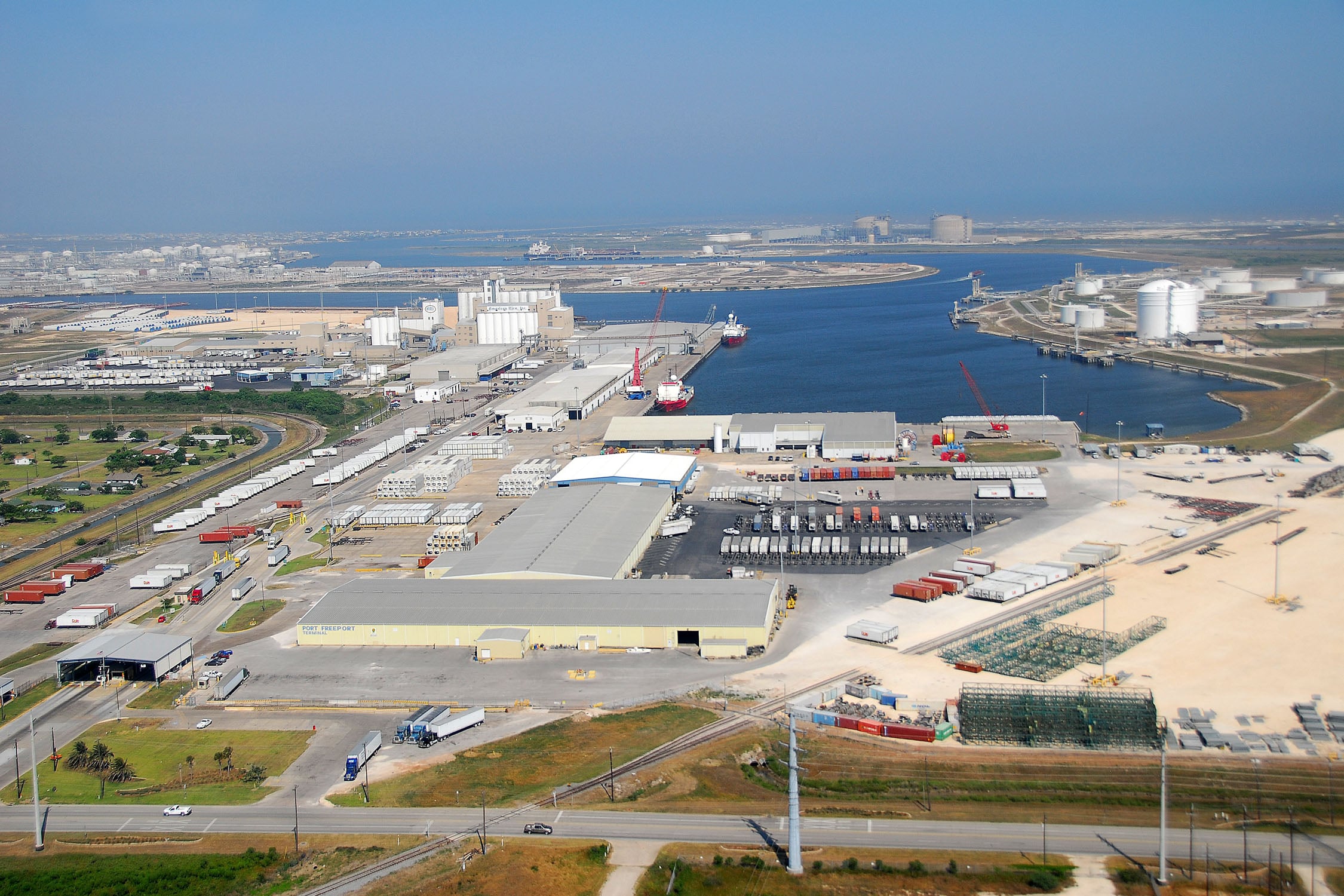
In 2004, the Port undertook three major projects in its efforts to diversify its cargo base. Construction of a 38,000-square foot Cool Storage Facility to handle palletized fruit as well as other temperature-sensitive commodities was completed in 2005. Design of the Velasco Terminal project was started in late 2004 and construction started in early 2007. The new 800-foot-long berth was designed to handle the next generation of gantry cranes and accommodate vessels up to 48-foot draft. The signing of a land lease agreement with Freeport LNG was the first step in the construction of a liquefied natural gas receiving facility. Construction began in early 2005 and was completed in 2008. The first vessel of liquefied natural gas was received in April 2008.
In 2007, the State of Texas passed House Bill 542, which legally changed the name of the Brazos River Harbor Navigation District to “Port Freeport” and the name of the governing body of the Brazos River Harbor Navigation District to “Port Commission” and the name of each member of the Port Commission to be changed to “Port Commissioner.” Development on Parcel 25 began, and wind energy units began moving through Port Freeport via Suzlon Wind Energy Corp. and other manufacturers.
The Port completed construction of a 60-acre project cargo area that was leased for storage of wind power production components in 2009 at Parcel 25. In addition, the first 5 acres of an additional project cargo area at Parcel 19 were completed and the design for the next 10 acres was completed in 2009.
2010s: Policy Advancements and Early Infrastructure Growth
In 2011, the State of Texas passed House Bill 1305, which granted authority to Port Freeport to issue permits for the movement of oversize or overweight vehicles carrying cargo on highways located within a ten-mile radius of Port Freeport.
In 2013, Velasco Terminal Phase 1, Berth 7 was completed and operational. The permit system for the movement of oversize or overweight vehicles carrying cargo on highways located within a ten-mile radius of Port Freeport was implemented.
The Feasibility Phase of the FHCIP was completed and the USACE issued a Chief’s Report to the U.S. Congress recommending the deepening of the Freeport Harbor Channel in 2013.
2010s: Infrastructure Expansion and Global Partnerships
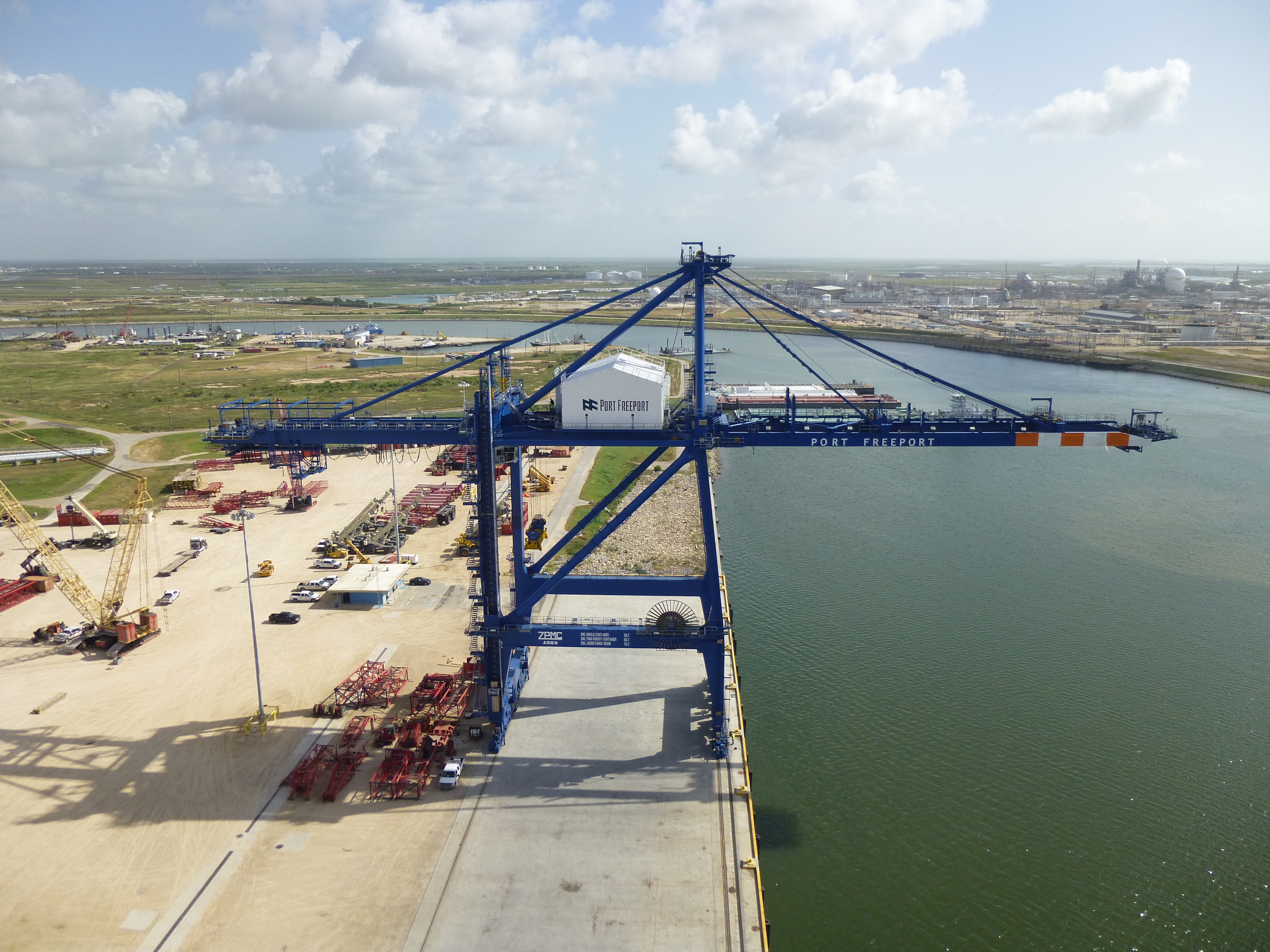
In 2014, the Port purchased two Post Panamax ship-to-shore container cranes for Velasco Terminal. Mediterranean Shipping Company, S.A. began servicing the Port in a vessel sharing agreement with Chiquita Brands International. In preparation of its new export facility, Freeport LNG signed an agreement with Port Freeport to widen the Freeport Harbor entrance channel.
In June of 2015, Hoegh Autoliners joined the Port’s family of partners and created the first major automobile import/export facility at the Port offering all services to ocean carriers moving of all kinds of rolling stock. Port Freeport also signed leases with Zachry for construction staging areas for the construction of Freeport LNG’s three new “trains.”
Congress approved the Water Resource Development Act designating the FHCIP as an “authorized project” which placed the 56-foot channel deepening project as one of the top federal projects considered for funding.
In 2016, the chiller was demolished, making additional open storage area alongside Berth 2 and to facilitate and expedite roll-on/roll-off (Ro/Ro) ship discharge and loading operations. Port Freeport also welcomed the first Post-Panamax vessel to call the Port. Port Freeport reached a milestone in its history, surpassing three million tons of cargo handled at the public berths.
In 2016, Freeport LNG (FLNG) commenced construction of three new export LNG trains and announced plans for an additional fourth train.
.jpg)
2010s: Strategic Partnerships and Industrial Growth
2017 was another banner year that saw the Port and the USACE partnering again on significant projects. The Port and the USACE approved the Freeport Placement 1 Containment Dike Raising, which created significant new capacity for dredge material placement. The USACE and Port also approved a new study as part of the GRR (General Re-evaluation Review) that would look at navigation enhancements as they relate to widening the current channel.
One of the Port’s newest tenants, Tenaris, opened their new seamless pipe manufacturing facility in Bay City, Texas. This $1.7 billion-dollar facility’s feedstock began arriving by vessel weekly in August 2017.
The State Legislature, in 2017, authorized the extension of the Port’s HLC (Heavy-lift Truck Corridor) by adding a route from Sweeny, Texas to Bay City, Texas to its list of routes offered to local industry. This route helps facilitate the delivery of steel products by truck to and from Bay City and Port Freeport, reducing the number of transits by 40 percent.
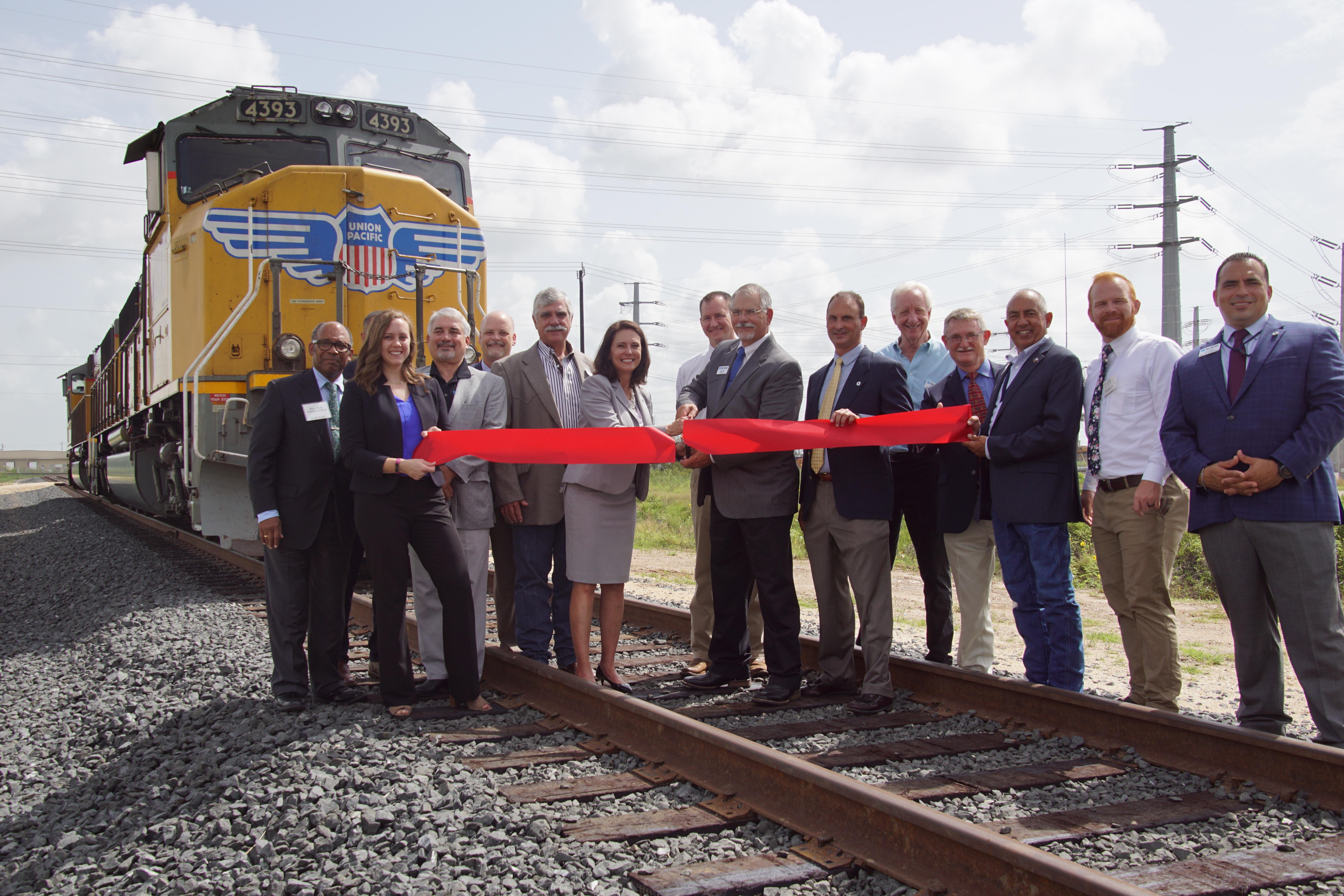
Port Freeport reached a major milestone in 2017 by approving its first major rail project, adding 21,000 feet of lead and storage track on Parcel 14, which is a 242-acre site designed for multi-modal operations.
2010s: Multimodal Expansion and National Recognition
In December 2018, Port Freeport was named to the Top 10 List of Fastest Growing US Ports for Exports by Forbes Magazine.
In 2018, the Port continued with its growth and expansion plans. New service lines were added with Sallaum Lines as well as Hoegh Autoliner offering a new service to Australia and New Zealand. CMA\CGM, a global service carrier, also started calling Port Freeport with their weekly Brazex service.
The Port celebrated the 30th anniversary of the Foreign Trade Zone 149 which continues to provide economic benefits for users.
In May 2018, the voters approved the issuance of $130 million General Obligation Bonds for the Port’s non-federal sponsor contribution to the Freeport Harbor Channel Improvement Project. The total project construction cost is estimated to be $295 million.
During 2019, Port Freeport executed 2nd Lease Agreements with two of its existing customers, namely Horizon Terminal Services (now renamed Horizon Auto Liners) and Vulcan Construction Materials. The Port also signed a new Lease Agreement with G&H Towing Company to ensure that technologically advanced, first-class towing vessels can service ships arriving to and departing from Port Freeport.
2019 was highlighted with a historic ribbon-cutting event. The earlier mentioned $26.5M Phase 1 Rail Infrastructure Project that constructed over 21,000 linear feet of a railroad track on the Port’s 262-acre Parcel 14 was completed.
2020s: Channel Investment and Infrastructure Acceleration
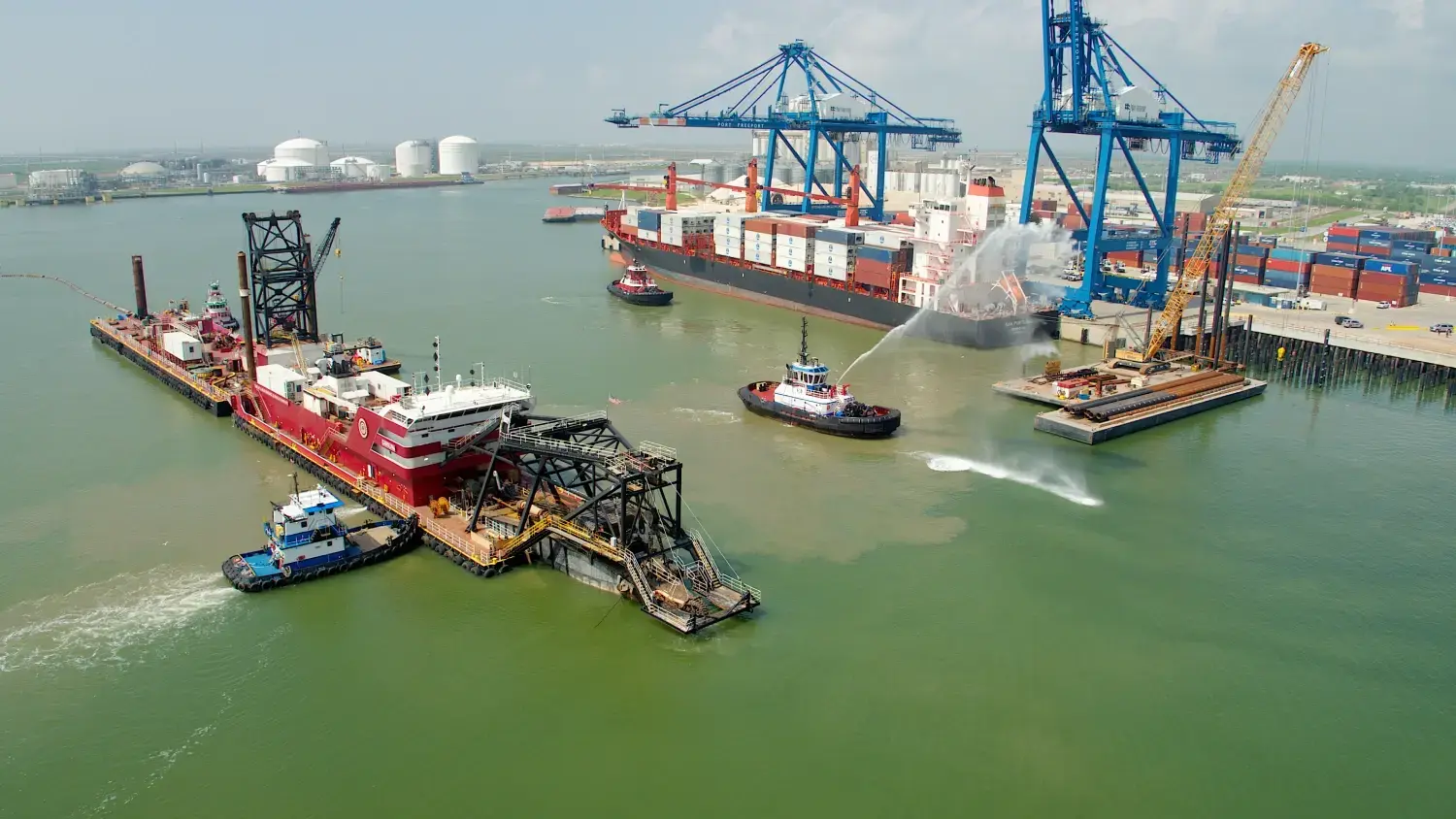
In February 2020, the USACE announced $19 million in funding was included for the FHCIP in the USACE FY 2020 Work Plan and named Port Freeport as one of two seaports nationwide to receive a “new start” designation for commencement of construction. A Project Partnership Agreement was signed between Port Freeport and the USACE in June 2020. In September 2020, the USACE awarded the first dredging contract to Great Lakes Dredge and Dock Corporation in the amount of $15.4 million.
Port Freeport’s Ro/Ro services grew with the arrival of two new services: ACL Grimaldi and Wallenius Wilhelmsen. The Port’s investment in landside multimodal infrastructure, which includes 20 acres of automobile storage and processing that was placed into service in August 2020, brought the total number of vehicle spaces on Port property to 10,000.
Freeport LNG began commercial operations and the exporting of natural gas to three liquefaction trains. The first rail cars were delivered to Parcel 14 and, CEMEX, a new partner, established a CO2 transfer facility on Parcel 25 which transports CO2 to Mexico.
2020s: Global Connectivity and Multimodal Growth
In 2021, Liberty Global Logistics joined Port Freeport, adding new Ro/Ro cargo and sailings to our portfolio. Freeport LNG’s exports commenced adding 192 sailings of LNG. Vulcan Materials opened their new facility on Parcel 14 adding one unit train of limestone a week to rail traffic.
In December of 2021, Port Freeport achieved another major milestone with the arrival of the M/V ZHONG GU FU a Transfar Shipping PTE. LTD., arriving from Singapore, making it the first direct all-water sailing from Asia to Port Freeport.
In 2021, Port Freeport received $24.9 million in federal funding for the Freeport Harbor Channel Improvement Project (FHCIP). The first two phases of the project were completed by April 2022, and Port Freeport received $163.816 million in additional federal funding in 2022 for the FHCIP making it fully funded.
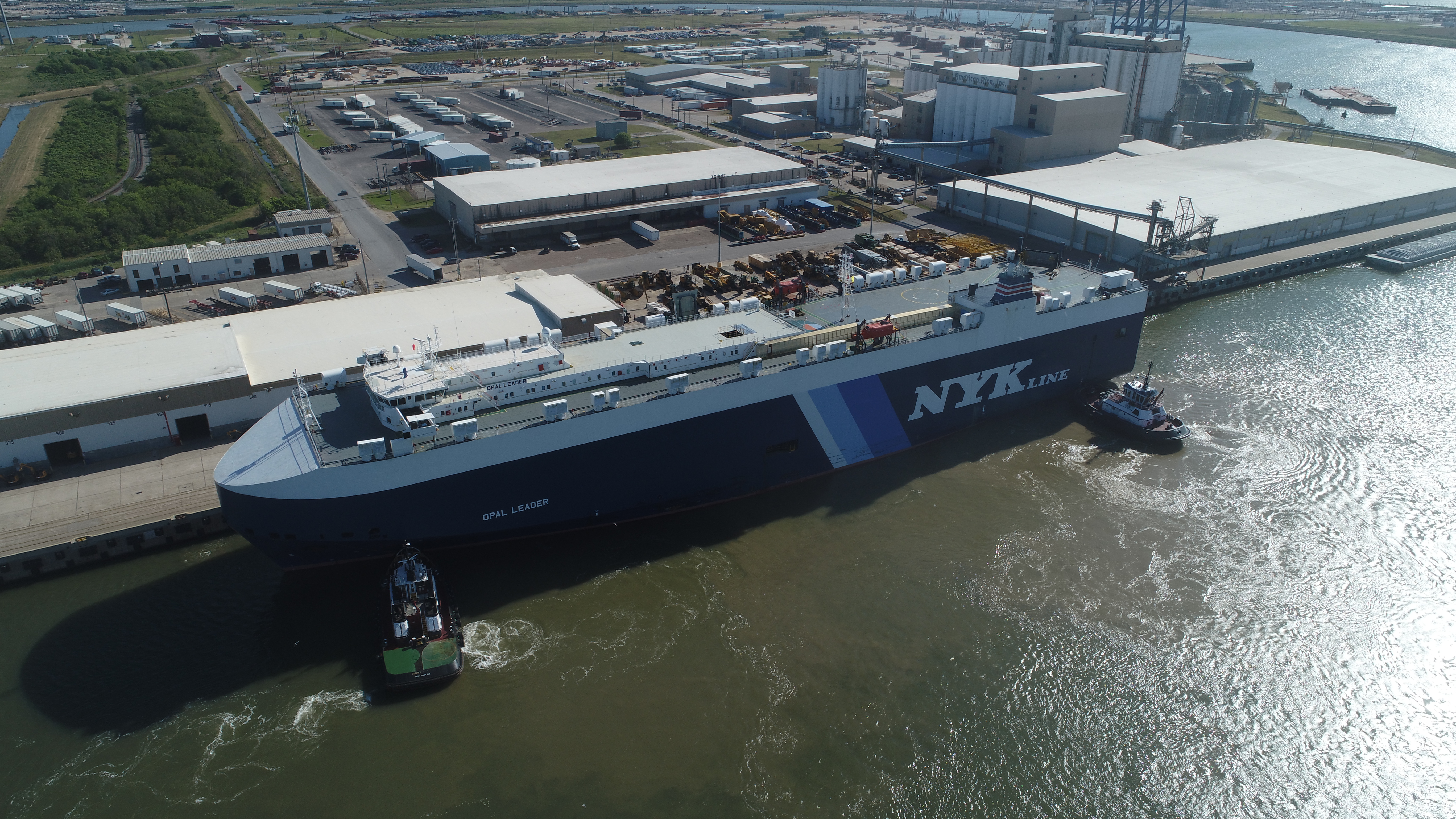
In 2022, NYK Line, the largest Ro/Ro carrier in the world, joined the Port Freeport family of carriers with the arrival of the M/V Opal Leader. The new monthly service will call Mexico, Panama, Colombia, and Brazil. A multi-year agreement was signed with Volkswagen Group of America to construct a 120-acre facility along SH 36 west to handle the import of 140,000 new cars and trucks to Port Freeport.
The $9.5 million expansion of Port Freeport’s rail terminal on the Parcel 14 multimodal site was also completed in 2022. This 2nd phase of the rail terminal expansion added 4 ladder tracks to the existing 3 providing Port Freeport over 7 miles of total track
.jpg)
2020s: Expansion, Efficiency, and Historic Milestones
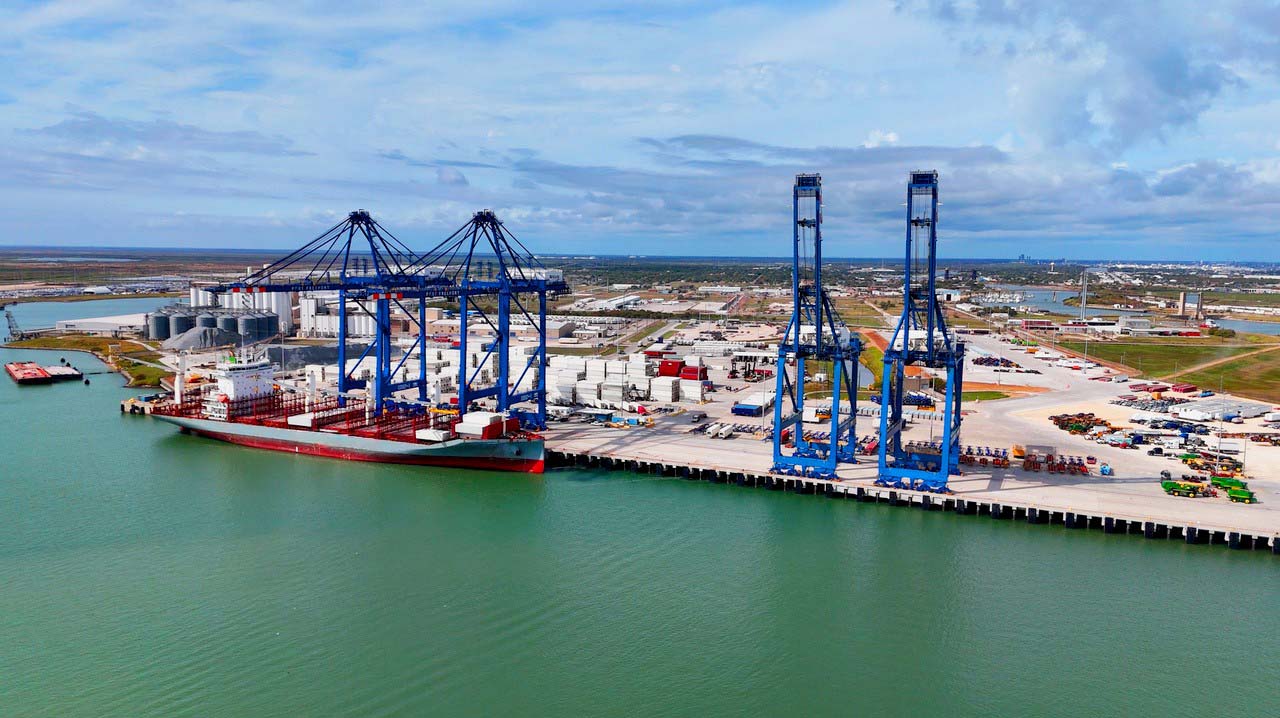
Port Freeport’s new Berth 8 was completed in May 2023. Berth 8 added 927 liner feet of dock plus an 85-foot Ro/Ro platform to provide Port Freeport over 1,800 linear feet of dock at Velasco Container Terminal.
In 2023, the Port entered a long-term agreement with Del Monte Fresh Produce to provide a weekly container service at Port Freeport’s Velasco Terminal beginning in 2024.
On September 14, 2023, the Port Commission adopted a Maintenance and Operations Tax rate of $0 marking the largest tax cut in the port’s history.
In March 2024, Port Freeport saw the arrival of MV WOLFSBURG, an LNG powered Ro/Ro vessel, delivered the first import shipment of finished vehicles for Volkswagen Group of America to the port.
In June 2024, Port Freeport saw the first ship for Del Monte Fresh Produce deliver refrigerated containers to the port marking the commencement of Del Monte’s operations at Port Freeport and also making Port Freeport the only port in the United States to have weekly vessel calls from the 3 largest fruit importers, namely Dole, Chiquita and Del Monte.
On September 12, 2024, the Port Freeport Commission voted to adopt a zero-tax rate, marking a historic milestone. For the first time in its history, Port Freeport will operate as a self-reliant entity with no tax assessment.
2020s: Infrastructure Expansion and Operational Efficiency
In May 2025, Freeport Warehouse LLC opened a new 80,000 square foot chilled cross dock facility to support the transloading of refrigerated cargo at Port Freeport.
In August 2025, the port opened the new Gate 12 to serve the Velasco Terminal providing more efficient movement of cargo to and from the port.
In September 2025, the port welcomed the delivery of two new Super Post-Panamax Ship-to-Shore gantry cranes to Velasco Container Terminal. The cranes are in excess of 300 feet tall with the ability to reach across 22 containers wide.
Significant progress continued on the Freeport Harbor Channel Improvement Project with substantial completion on track for December 2025.
2025: Centennial Celebration and Community Engagement
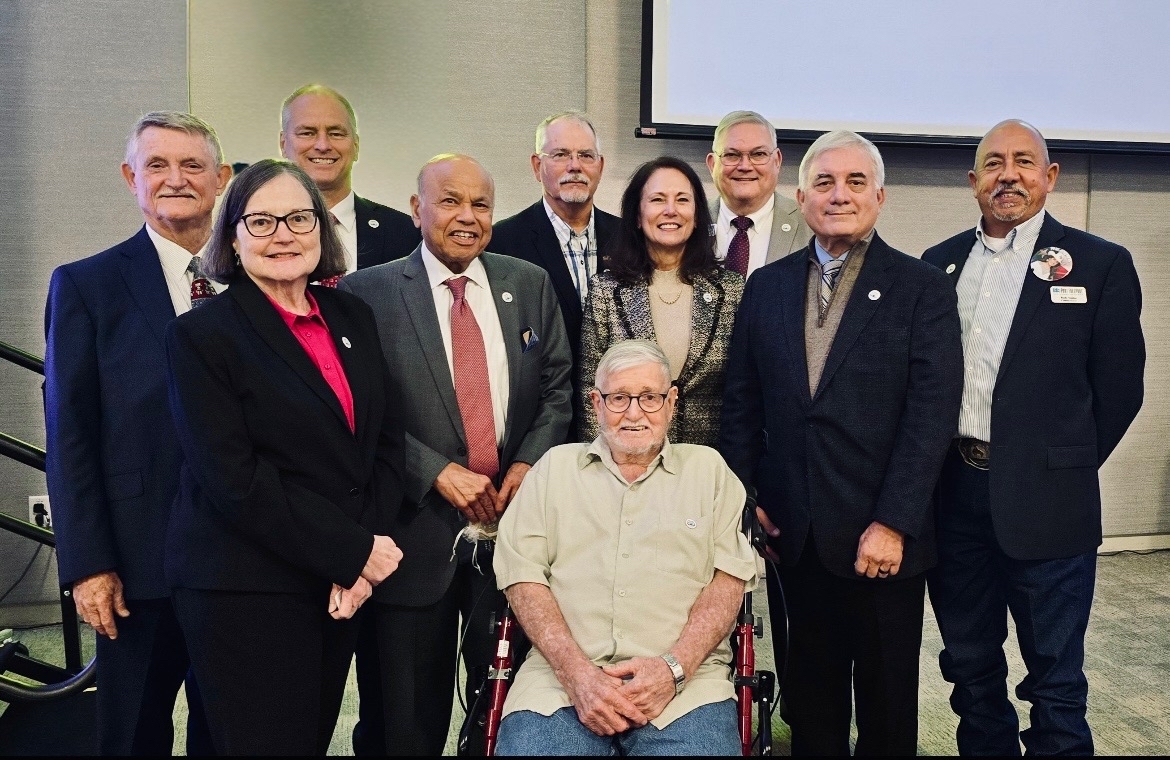
In 2025, Port Freeport proudly celebrated its Centennial, marking 100 years since its establishment by the voters of Brazoria County. Throughout the year, the Port commemorated this milestone with a series of events and initiatives that honored its history, recognized its partners, and celebrated the community that has supported its growth.
A Centennial Luncheon brought together Port Commissioners, industry partners, elected officials, and community leaders to reflect on a century of progress and the Port’s continued impact on the region. The event highlighted key milestones, partnerships, and the economic contributions that have shaped Port Freeport into a leading gateway for global trade.
In addition, Port Freeport hosted Community Port Tours, providing residents and stakeholders with a firsthand look at operations, infrastructure, and ongoing development projects. These tours offered a unique opportunity to connect the community with the Port’s mission and to showcase the role Port Freeport plays in supporting jobs, industry, and economic vitality across Brazoria County and beyond.
Through these Centennial efforts, Port Freeport not only honored its legacy, but also strengthened its commitment to transparency, engagement, and continued partnership with the community it serves.